
GREAT SAND DUNES — Despite the recent challenges posed by wildfires that have brought smoke into the Valley and reduced visibility, a recent analysis of national park visibility data by the Washington Post ranks Great Sand Dunes National Park and Preserve 8th out of 76 national park sites. This resilience is a testament to the enduring beauty and allure of the park.
This item is available in full to subscribers.
To continue reading, you will need to either log in to your subscriber account, below, or purchase a new subscription.
Please log in to continue |
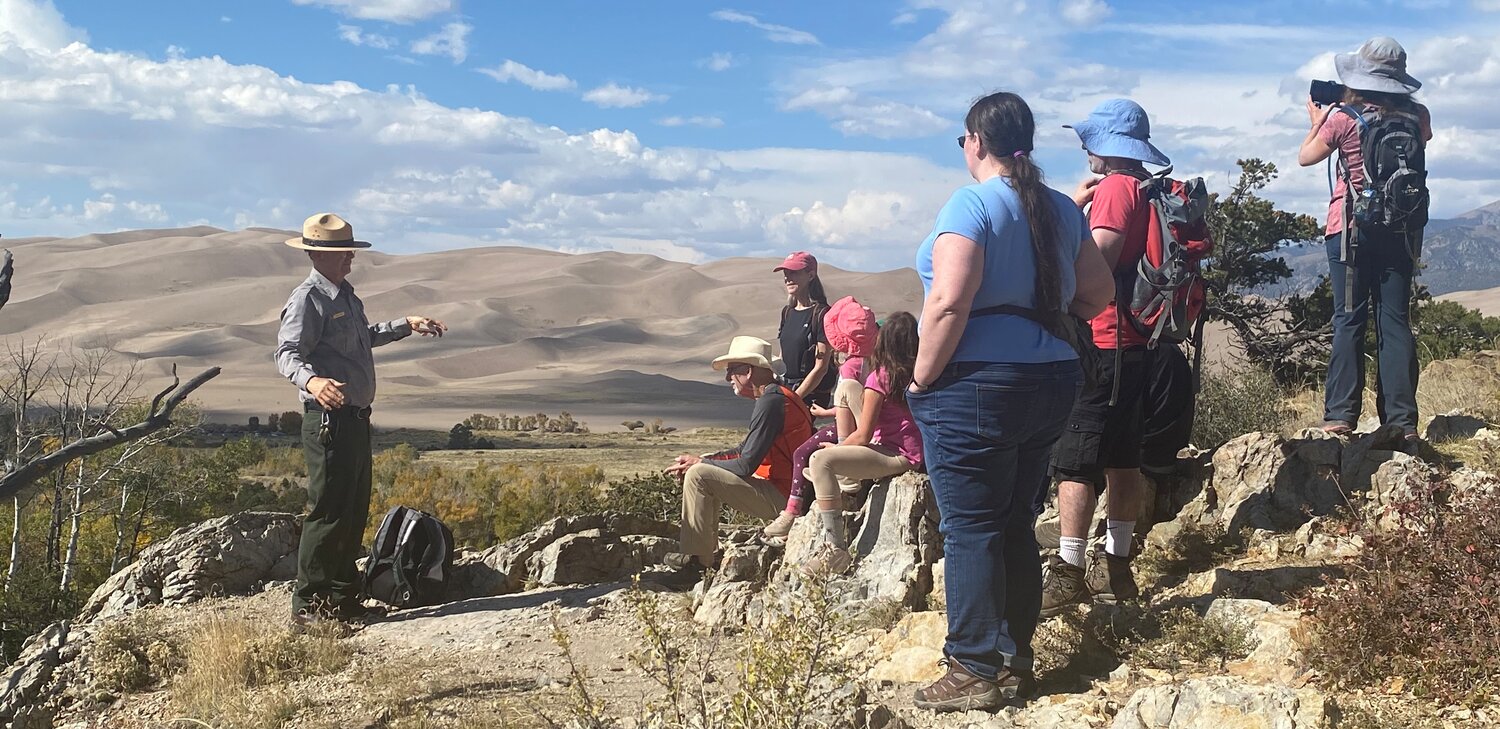
GREAT SAND DUNES — Despite the recent challenges posed by wildfires that have brought smoke into the Valley and reduced visibility, a recent analysis of national park visibility data by the Washington Post ranks Great Sand Dunes National Park and Preserve 8th out of 76 national park sites. This resilience is a testament to the enduring beauty and allure of the park.
The park service employs sensors that collect air particle samples every three days and send samples weekly to a lab for chemical analysis. The amount and composition of the particles are used to estimate the quality of visibility.
Visibility is one of the most essential attributes of any national park, both during the day and at night. According to the Great Sand Dunes National Park Park website, "Half the park is after dark! With a combination of dry air, minimal light pollution, and high elevation, Great Sand Dunes National Park and Preserve has been certified as an International Dark Sky Park by Dark Sky International, meeting strict standards for sky darkness, limiting outdoor lighting, and collaborating with neighboring communities to reduce light pollution."
Dani Robben, Community Outreach Manager at San Luis Valley Great Outdoors (SLV GO!), told the Valley Courier, "Great Sand Dunes National Park became a designated International Dark Sky Park in 2019 in recognition of the park's outstanding dark skies and commitment to night sky preservation. The high elevation, dry climate, and distance from urban centers combine to create a crystal-clear view of the sky. Stargazing at the dunes is magical, and the staff there make it incredibly accessible for people of all ages and abilities to experience the night sky through star parties, telescope viewing, and even occasional moonlit hikes."
According to the park service, "Visitors come to Great Sand Dunes National Park and Preserve to enjoy views of impressive dunes against the backdrop of the Sangre de Cristo Mountain Range. Park vistas are sometimes obscured by haze, reducing the clarity and distance at which people can see. Visibility-reducing haze is caused by tiny particles in the air, which can also impact human health. Many of the same pollutants that ultimately fall out as nitrogen and sulfur deposition contribute to this haze. Organic compounds, soot, and dust also reduce visibility.
“Significant improvements in park visibility on the clearest days have been documented since the 1990s. However, no significant trends have occurred on haziest days, and visibility in the park still needs improvement to reach the Clean Air Act goal of no human-caused impairment."
On clear days, visibility at Great Sand Dunes is approximately 170 miles; however, on hazy or smoky days, it can be reduced to a few miles. During recent smoky conditions, it wasn't easy to make out the details of the San Juan Mountains, which are less than 30 miles from the park.
In the 1970s, atmospheric physicists with the National Park Service in the Grand Canyon pioneered the science of quantitatively measuring visibility across a landscape with accuracy and precision.
Clear skies during the day and stunning dark skies at night not only bring visitors to the park and region, but also significantly contribute to the local economy. In 2023, the park generated $37.9 million in economic impact, with $41.3 million in economic input to the region, supporting 427 jobs. Last year, the park had 437,661 visitors. This is a testament to the park's importance and value to the local community. Nationally, national parks contribute $55.6 billion to local economies.
A 2023 economic study by researchers at the University of Northern Colorado and Colorado College found that in a survey of 367 visitors to Great Sand Dunes, 47% would reduce future visits if the park's night skies became less dark or clear. The report estimates that even slight increases in light pollution, to levels comparable to those in nearby Alamosa, could result in annual tourism revenue losses.
Great Sand Dunes National Park and Preserve contributes significantly to our economy and quality of life; generally good visibility is a key component of these attributes.


