
ALAMOSA — When Paul Sedlak sat down to write “Life Is What You Make It”, it was the fulfillment of a promise he had made to God years before. Keeping a promise, being “brutally honest”, doing what you say you’re going to do and living by a set of values without compromise are all cornerstones of Sedlak’s approach to life and his experience as a “co-creator” with God.
This item is available in full to subscribers.
To continue reading, you will need to either log in to your subscriber account, below, or purchase a new subscription.
Please log in to continue |
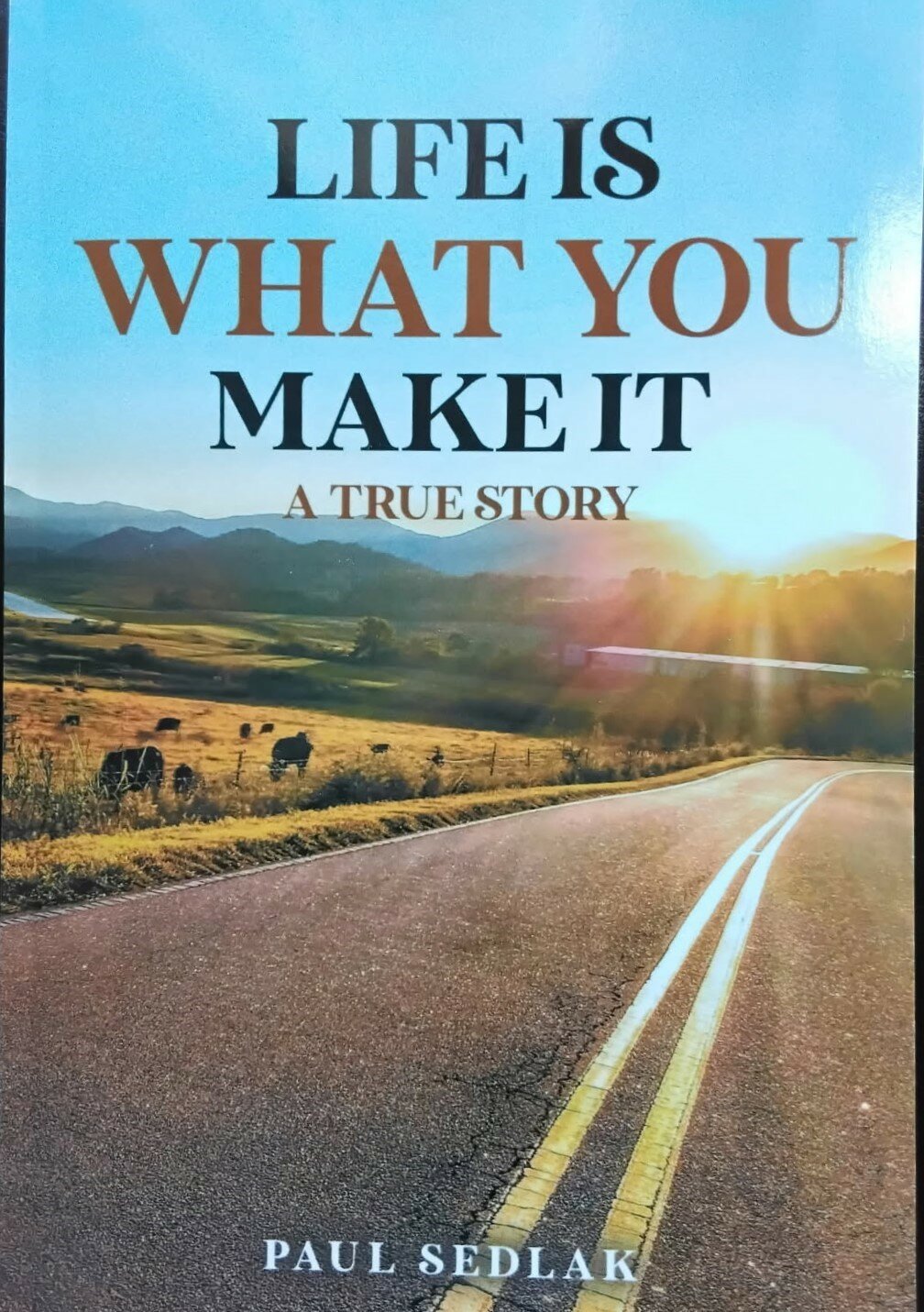
ALAMOSA — When Paul Sedlak sat down to write “Life Is What You Make It”, it was the fulfillment of a promise he had made to God years before. Keeping a promise, being “brutally honest”, doing what you say you’re going to do and living by a set of values without compromise are all cornerstones of Sedlak’s approach to life and his experience as a “co-creator” with God.
So…Sedlak said he would write a book, and he did.
But as he tells his story – which he does with great vigor – it’s quickly apparent that things weren’t always that way in his life, and the journey he took from where he started to where he is has yielded lessons he feels could be enlightening to others.
Sedlak, who is 59 years old, grew up in the “communist state of Czechoslovakia.” Life was rough as a boy. His father was an alcoholic who was impatient and condemning. His mother was dismissive, preferring his older sister who was naturally gifted.
“I had all kinds of issues when I was a kid,” he says. “Allergies, eczema, my shoulder was dislocated six times. My teeth were broken, and I had a golden tooth that the other kids made fun of.”
But the problems truly began when, at the age of six, Sedlak was hospitalized for his eczema. “They tried lotions and creams for two months. I was the youngest one – there were ten or fifteen other guys. They were much older and were making fun of me. It was really humiliating, standing in line with them putting different creams on me – yellow or black or white. From that point on, my life changed.”
Sedlak says he “hated [his] parents for putting him there” and, once he was discharged, decided to “do whatever it took” to make them pay.
“I wanted to punish everybody and anybody. I didn’t like the school and when the teachers said, ‘do this’, I didn’t do it. I figured if I can’t be the best, at least I’ll be the best of the worst, and my only friends were troublemakers like me. When I was older, I liked breaking
windows, even breaking windows at the government - anything that reminded me of some kind of limitations and put me in bondage.”
Then “everything changed” when a teacher said something – not to Sedlak but about him. This teacher was “very mean but she was also brutally honest, no matter who you are.” One day, she came into his classroom and showed the students a picture of an athlete, saying, “Even Paul could look like this if he ate the right food.” Sedlak admits to being “chubby” as a kid from too much junk food but, instead of being offended by her comment, he was inspired.
He started running every day. “After six or seven months, the eczema went away and then the allergies.” He had an operation on his shoulder and was told he would never be able to lift much weight. Before long, he was lifting over 100 pounds.
“Everything I’d learned was a lie. Everything I thought was a lie. I’d been told I couldn’t play athletics, and that was a lie, too.”
In the years that followed, Sedlak’s actions were determined by what he was told he couldn’t do, whether it was owning a business or an expensive car or getting a passport to come to the United States.
“I just wanted to prove somebody wrong. I didn’t know myself at all. I didn’t know who I was. I didn’t know what I really wanted.”
When he was 33, Sedlak decided coming to the United States would allow him the chance to learn about himself. “I didn’t have any friends, any money. I didn’t speak English but that was fine with me. I just wanted to know who I was.”
After a time, he established himself in Florida, working for a tree business. Then he started a business of his own and hired a crew of workers. But when 9/11 happened, he lost his Visa.
“I had to decide what to do. I knew if I went back to Czechoslovakia, it would be easy, but I didn’t want that. I decided to not cheat anymore no matter what happens. I decided not to compromise.”
He started attending church but saw the people were unhealthy. He was fine on his own, he says, and didn’t need Jesus. He started reading the Bible but “I was like who cares. I wasn’t chasing heaven or escaping hell. I just wanted to know myself, and if God really exists and if there was really a spiritual world where you could go and ask for help.”
As he had always done, he tested the situation, but this time he was testing the reality of God. He stopped pushing things, stopped being in opposition to what was around him,
literally surrendered and trusted that situations would work out, which they did over and over again.
“During those years, I learned a lot about me. I learned how to surrender and really let it go. It wasn’t easy. But when I pushed something, it never worked. And when I just gave it up, it always did.”
Sedlak says, reluctantly, he thinks most people don’t understand God. “He’s not some grandpa sitting in heaven either judging you or making you feel good.” He views the relationship as much more dynamic, more like a partnership.
“God gives you wisdom. He can teach you and give you understanding. But he’s not going to force you. He is more interested in teaching you about who you are and how powerful you are because you are a co-creator of your life with him. And then he wants you to see he has the solution. If you really have the desire for something, that’s from God.”
Sedlak’s journey to understanding didn’t come in the form of a burning bush or a descending angel. At least, he didn’t mention that in the conversation. Instead, as he describes it, it was born of pain and anger followed by a deep need to know himself and, ultimately, to know God. And what is shared here is just a small part of what is written in his book “Life Is What You Make It”.
Sedlak will be making a presentation at the Alamosa Public Library on Friday, Feb. 28. from 4 to 5 p.m. The library is at 300 Hunt Ave.


