
ALAMOSA — For more than half of her life, Alamosa resident Cathy O’Neill has worked for Natural Resources Conservation Services (NRCS), the US Department of Agriculture’s (USDA) primary private land conservation agency.
This item is available in full to subscribers.
To continue reading, you will need to either log in to your subscriber account, below, or purchase a new subscription.
Please log in to continue |
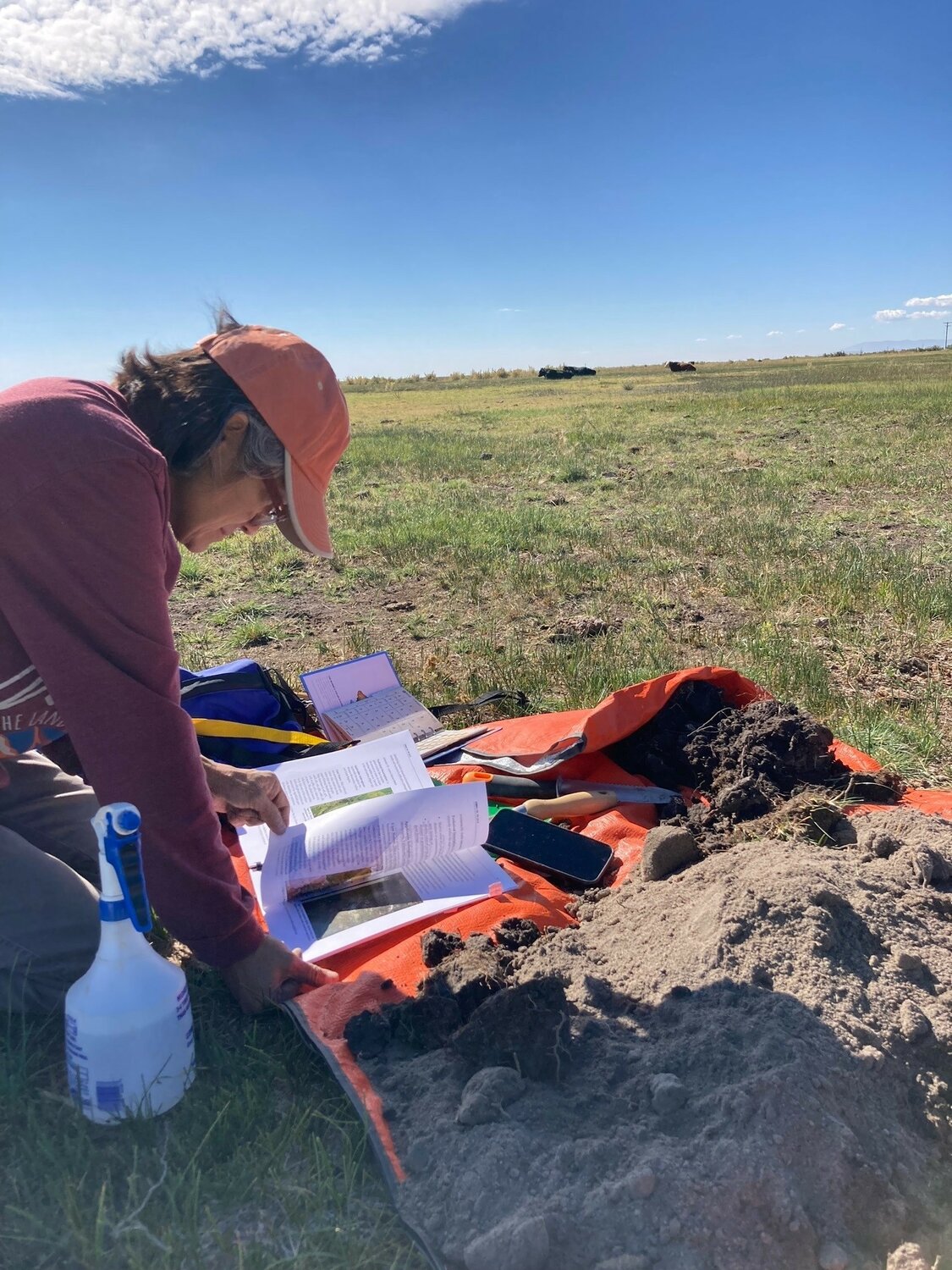


ALAMOSA — For more than half of her life, Alamosa resident Cathy O’Neill has worked for Natural Resources Conservation Services (NRCS), the US Department of Agriculture’s (USDA) primary private land conservation agency.
During that time, she’s been a soil conservationist, a district conservationist, an area programs specialist and, finally, an area resource soil scientist.
“My job has been a huge part of my life,” O’Neill says. “This is my career. My profession. This is what I went to college for, and I love what I’ve been doing for the past 30 years. I think all of my coworkers feel the same way.”
But after a lot of thought, O’Neill signed documents this week that will allow her to retire from NRCS. “For me, the situation worked out, but I’m an incredibly rare case. Other people I work with weren’t so lucky".
Established 90 years ago, NRCS plays a vital role in helping farmers, ranchers, soil and water conservation districts and other partners protect and conserve natural resources on private lands throughout the United States with about 2,300 Service Centers in communities nationwide. In Colorado, there is a state NRCS office, an area office in each of three regions and 21 county offices. Because of their proximity and expertise, NRCS staff members are known for working side-by-side with producers.
“NRCS is extremely important [in the San Luis Valley],” says Saguache sheep rancher Sherri Haugen. “They have a lot of programs for farmers and ranchers to improve their operations, like EQIP which restores riparian areas and supports the installation of virtual fencing. The staff know what they’re doing, and they’re very supportive.”
“For people in the west, water is always on the top of their mind, and that’s only going to become more dominant,” says Tyler Garrett, director of government relations with the Rocky Mountain Farmers Union. “NRCS has a lot of water projects and projects for soil issues, which is important because healthy soil equals less water consumption.”
Bill Brinton, farmer and president of the Mosca-Hooper Conservation District, agrees. “NRCS programs are really critical in terms of technical and field soil and water conservation with a focus on efficiency of farm operations in power and water. That’s very important, especially for water conservation. The agency not only assists with matching funds and loans but also engineering and technical support for how to make irrigation systems more efficient, like a better pump or more complicated projects.”
Despite serving a vital function in an essential industry like agriculture, on Feb. 14, NRCS long-term employees received letters incentivizing resignation and probationary employees received notices they were being fired.
“The email said it was due to poor performance,” O’Neill says. “We immediately got a call from our state conservationist, Clint Evans, who was appalled that it was put that way because it had nothing to do with performance.”
At that meeting, it was also learned that the notices caught everyone by surprise. “They came directly from the Department of Government Efficiency [DOGE], completely bypassing local leadership. They weren’t even coming through the Department of Agriculture.”
How many staff have left employment is unknown, and a request from the Valley Courier sent to the state NRCS office was forwarded, “per department policy”, to Washington. As of press time, no information had been received.
But according to Garrett, farmers and ranchers are already feeling the impact. "Offices that were previously staffed with four people are now down to one while other offices have no staff, at all.”
If there are no staff to administer crucial programs like water efficiency and soil health, Brinton says, “those programs don’t exist. And that would be a significant loss for the San Luis Valley. Our water resources are in short supply and, with our snowpack, likely to be in very short supply this summer.”
When asked just how bad that loss could be, Brinton says, “Over the next several years, we’re going to experience economic and farming instability because of water shortage and loss of agricultural productive lands. Those programs help lessen those losses that we are going to experience.”
A lot of the probationary employees who were fired are engineers, and engineers are required for a lot of the water conservation and irrigation efficiency projects to be completed, O’Neill says. As a result, “Clint Evans, the top official in the state NRCS, told staff that, due to a potential shortage in engineering staff, irrigation efficiency will become a much lower priority.”
Put more simply, while water is already in short supply in the San Luis Valley and this year is predicted to be an especially “bad water year”, NRCS – one of the main agencies supporting agricultural water conservation and efficiency projects – will be hard pressed to support those efforts because the people needed to do the work were fired.
Garrett is even more blunt, saying cuts so deep as to imperil or discontinue water conservation and soil health projects would be “catastrophic.” Sheep rancher Haugan calls it “disastrous.”
As her employment with NRCS draws to a close, O’Neill says she’s still shocked by the changes being made at NRCS. “We’re putting a halt to all outreach activities and recruitment activities at colleges. Things are completely getting wiped off our website - we no longer have Spanish language website pages or are allowed to give material in other languages. And there’s disciplinary action if people don’t take their pronouns off their emails.”
But even more than sad, O’Neill is deeply hurt by how the layoffs have been handled. “Nobody goes into this kind of work, nobody becomes a civil servant for the money. We care deeply about what we’re doing, whether it’s soil science or whatever.
“This attack…I don’t understand it. What did we do that was so bad to deserve this? People wanted to stay. They felt like ‘this is my career. I care about what I do, I care about the landscape’.
“And so they stayed and for them to then get a letter that says they were fired because of poor performance? What on God’s green earth…why? What is this about? We went to school, we got educated and we’re doing what, we think, is God’s work. And now I feel like we’ve become public enemy number one. It makes a person just want to say…where do I sign up for the revolution?”
A second round of even deeper cuts seems likely as, earlier this week, the White House ordered agencies to prepare a plan for “large scale” firings.


