
With warmer temperatures in recent weeks in the San Luis Valley, now is the time for residents to start removing attractants and practicing bear-aware habits to prevent conflicts as bears wake up early.
This item is available in full to subscribers.
To continue reading, you will need to either log in to your subscriber account, below, or purchase a new subscription.
Please log in to continue |
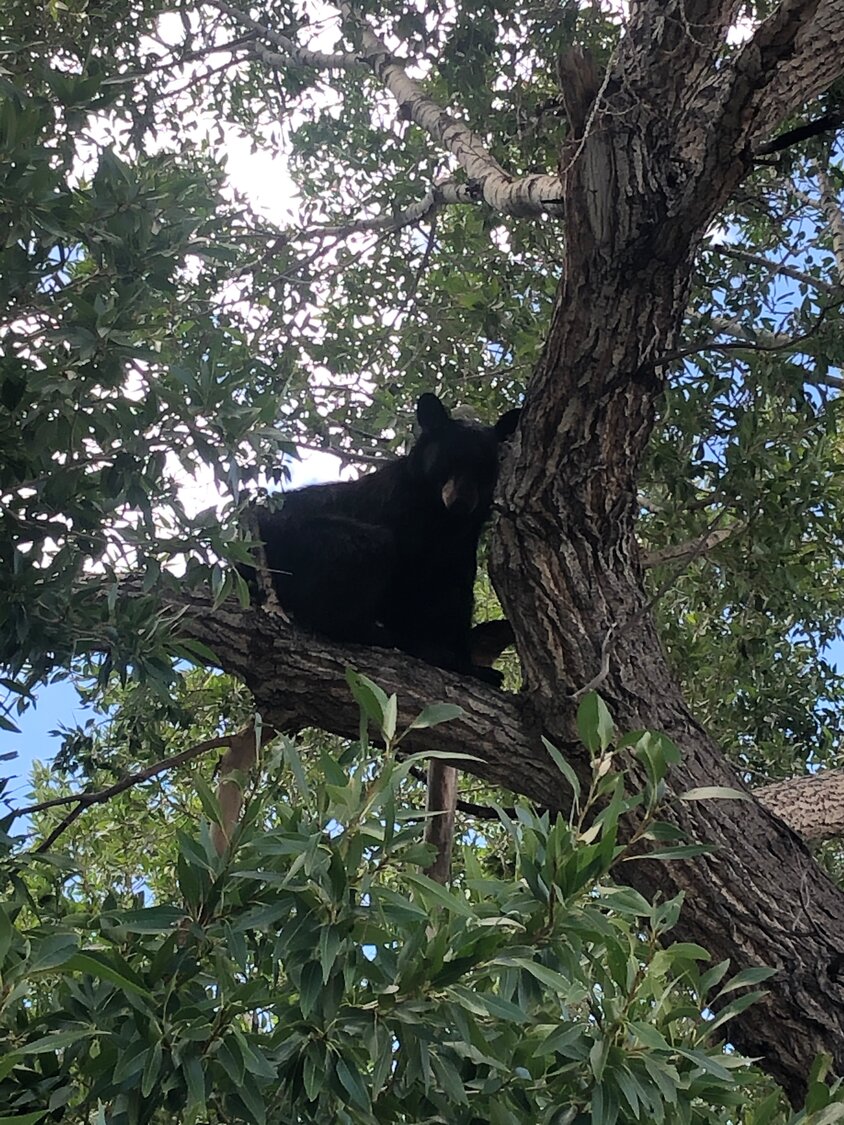
COLORADO — With warmer temperatures in recent weeks in the San Luis Valley, now is the time for residents to start removing attractants and practicing bear-aware habits to prevent conflicts as bears wake up early.
"The warm weather we have been experiencing can cause bears to emerge from their dens earlier than in years when we have a 'normal' winter. The warm temperatures can trigger them to come out of the den and begin to search for food," said Wildlife District Manager Jeremy Gallegos with Colorado Parks and Wildlife (CPW).
According to Colorado Parks and Wildlife:
People often wait until a bear has gotten into garbage, bird feeders, or grills before acting. Starting now, removing or limiting attractants around homes is crucial to prevent conflicts as bears emerge earlier this year.
Female black bears, or sows, have a unique ability to adapt to harsh conditions. One adaptation is the delayed implantation of the fertilized egg in the uterus. Breeding seasons are in May and June, the egg isn't implanted in the uterus until October and November. If the sow is in poor enough condition, the egg either won't be implanted or it will be absorbed, and reproduction will not occur. We do see, unfortunately, those instances where a sow has a cub and has to make the tough choice of her survival. She will abandon the cub for self-preservation. CPW saw this back in 2020, when we caught close to a dozen cubs around the Valley that had either been abandoned or had lost their sows. The cubs were taken to our Frisco Creek Wildlife Rehabilitation Center.
As of now, it is shaping up to be a tough year for bears. Their population will fluctuate somewhat from year to year, and the drought conditions will influence it. CPW documents every mortality that we know about to manage for a sustainable bear population in the San Luis Valley.
Stash your trash – if a bear-proof dumpster is not available, keep your trash bin in your garage or shed and roll it out only the morning of pickup. We recommend putting an old towel soaked in bleach to help mask the smell and keep the odor down.
Secure your house and vehicles – make sure you close your windows and lock your doors. The vast majority of bears that have entered homes and vehicles in my career have done so through an open window or door. A good rule of thumb is that if a human can reach up to climb through a window, a bear can.
Don't feed wildlife – CPW does not recommend feeding birds when bears are active. Although it's not illegal to feed birds, doing so can attract bears. Once it is successful at getting something to eat, it will be back.
Keep your grills clean – burn off and clean your grills after each use, including the grease trap!
Electrify your chicken coops and rabbit hutches – electric fencing works really well at protecting smaller spaces where you can't remove all of the food attractant. Chickens or rabbits aren't necessarily the initial target; the food stored in these enclosures is. They end up being casualties in the break-in, though. Quality electric fencing, with good grounding and low, medium, and high wires, can help keep bears at bay.
If you have a conflict, give CPW a call. Don't wait until you are wits end before giving CPW call. Our District Wildlife Managers may have ideas or tips you haven't considered, as well as a wealth of information and experience dealing with bear conflicts. Trapping is the last resort, as that bear may have to be euthanized due to the choices we have made. Most of the conflicts can be avoided, though, if we make some adjustments to how we handle the attractants around our homes.
For more information, visit www.cpw.state.co.us.


